
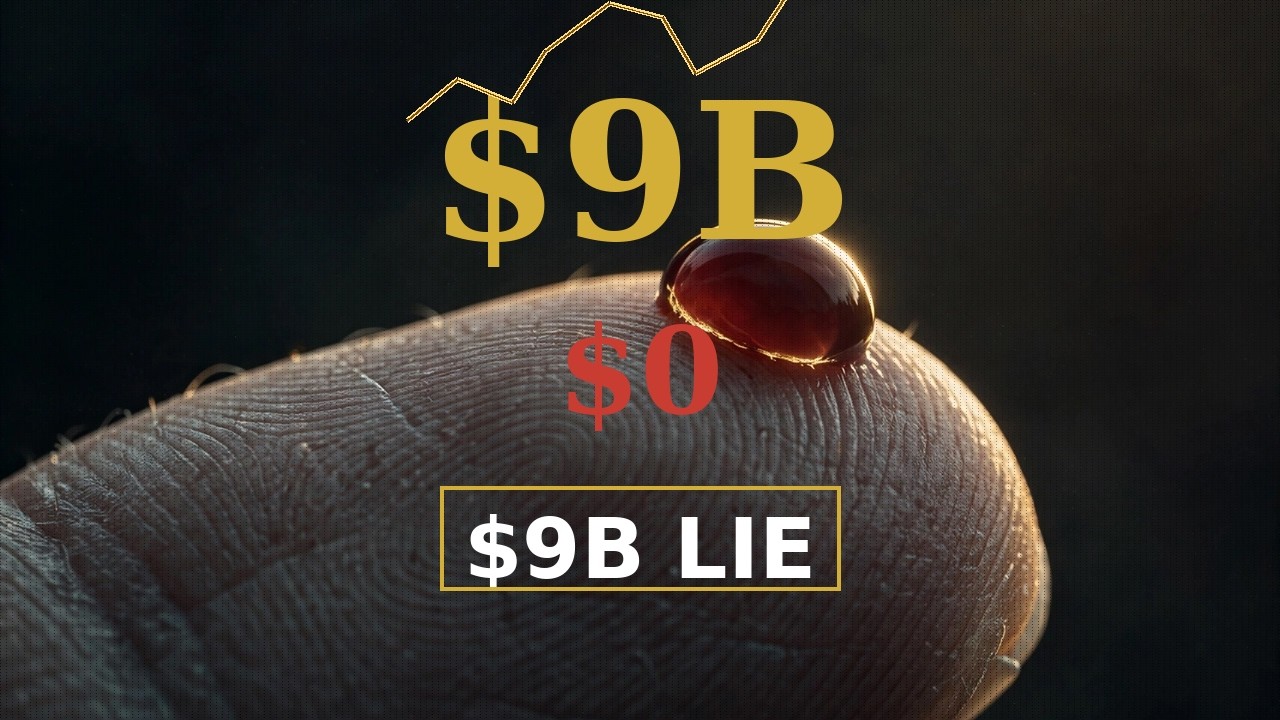
The Elizabeth Holmes Theranos story began with a promise. A few drops of blood from a finger, she said, could run hundreds of medical tests. Investors valued Theranos at about $9 billion in 2014. The technology never worked as claimed. In January 2022, a federal jury convicted Holmes of defrauding the people who funded it.
Here is how the Theranos scandal unfolded, from a Stanford dropout’s big idea to one of Silicon Valley’s most famous frauds.
Key facts
- Founded: 2003 by Elizabeth Holmes, then 19, who soon left Stanford
- Peak valuation: about $9 billion in 2014
- Money raised: more than $700 million from investors
- Exposed: Wall Street Journal investigation by John Carreyrou, October 15, 2015
- Shut down: Theranos dissolved in September 2018
- Verdict: Holmes convicted on 4 of 11 counts on January 3, 2022
- Sentence: 135 months on November 18, 2022, later reduced by a year
The Elizabeth Holmes Theranos Promise
Holmes founded Theranos in 2003 and left Stanford the following year to run it. Her pitch was easy to love. Blood tests are slow, expensive and unpleasant. What if one finger prick and one small machine could replace the vials and the needle?
The company’s device, later called the Edison, was supposed to do just that. Holmes styled herself as a visionary, often compared with Steve Jobs, down to the black turtlenecks. Even her unusually deep voice became part of the legend. Some former employees later told reporters it did not always sound that way in private.
How Theranos Reached $9 Billion
Theranos raised more than $700 million. Its board was full of famous names from politics and the military. That gave it a kind of credibility few scientists questioned out loud. In 2013, it began offering tests to the public inside Walgreens stores in Arizona.
By 2014, the company was valued at about $9 billion. Holmes owned roughly half of it, and Forbes put her on its list of the richest Americans. On paper, she was the world’s youngest self-made woman billionaire.
The climb took about ten years. These are the funding milestones Investopedia lists for the company.
| Year | What happened | Valuation |
|---|---|---|
| 2003 | Holmes, 19, founds the company after leaving Stanford | None yet |
| 2004 | Raises $6.9 million in early funding | About $30 million |
| 2007 | Raises another $43.2 million | About $197 million |
| 2010 | More funding rounds | About $1 billion |
| 2014 | Total funding passes $400 million; Holmes owns about half | About $9 billion |
| 2018 | Charged with fraud by the SEC, then dissolved | Zero |
What Did Elizabeth Holmes Tell Investors?
The trial was about specific claims, not general hype. Prosecutors showed she misled investors about the technology, the company’s partners and its money. According to the Justice Department, the evidence showed Holmes told investors her analyzer could run any test a normal lab could, from a finger-prick sample, faster and cheaper.
- Drug company approval. She said major pharmaceutical companies had checked and validated the technology, and showed investors reports carrying their logos. Those companies had not endorsed it.
- The military. She said Theranos had a profitable deal with the Department of Defense and that its device was used on the battlefield. It never was.
- Walgreens growth. She told investors the Walgreens rollout would grow from a few dozen wellness centers to 900.
- The machines. She knew the analyzer could run only a few basic tests, so Theranos quietly used conventional machines for most results.
Each claim helped bring in money. Together, they turned a lab experiment into a $9 billion company.
What Theranos Was Hiding
Behind the scenes, the machines couldn’t handle most of the tests the company advertised. Evidence at trial showed that Theranos ran many patient samples on modified machines made by other companies. Its own devices did not do the work. Employees who raised concerns described a culture of secrecy and pressure.
Some patients received results that later turned out to be wrong. Two former employees, Erika Cheung and Tyler Shultz, eventually helped bring the problems to light.
The Theranos Scandal Breaks
On October 15, 2015, the Wall Street Journal published John Carreyrou’s investigation into the company’s technology. Theranos denied the reporting. Regulators followed. In 2016, federal health regulators sanctioned its California lab, and Holmes was barred from operating a lab for two years.
In March 2018, the Securities and Exchange Commission charged Holmes with what it called a “massive fraud.” She settled without admitting or denying the allegations. Months later, federal prosecutors indicted her and former company president Ramesh “Sunny” Balwani. Theranos dissolved in September 2018.
The Elizabeth Holmes Theranos Trial and Sentence
Holmes went on trial in San Jose in 2021. On January 3, 2022, the jury found her guilty on four counts of defrauding investors. It acquitted her on four counts tied to patients and could not reach a verdict on three others.
On November 18, 2022, Judge Edward Davila sentenced her to 135 months, or 11 years and 3 months, in federal prison. Balwani was convicted separately on all 12 counts against him and received nearly 13 years. The two were ordered to pay $452 million in restitution.
Both appealed. On February 24, 2025, the U.S. Court of Appeals for the Ninth Circuit upheld the convictions of Holmes and Balwani, as Reuters also reported.
Holmes reported to prison in Texas in May 2023. Her sentence was cut by a year in 2026 under a change to federal sentencing guidelines. Our follow-up file on where Elizabeth Holmes is now covers her life since then.
Theranos Timeline: From Startup to Shutdown
- 2003: Elizabeth Holmes, 19, founds the company that becomes Theranos.
- 2009: Ramesh “Sunny” Balwani joins Theranos; he later became its president.
- 2013: Theranos starts offering tests to the public in Walgreens stores in Arizona.
- 2014: Investors value Theranos at about $9 billion.
- October 15, 2015: The Wall Street Journal publishes John Carreyrou’s investigation.
- January 25, 2016: Federal lab regulators warn of “immediate jeopardy” to patients at its Newark, California, lab.
- July 2016: Regulators revoke the lab’s certificate and bar Holmes from running a lab for at least two years.
- March 14, 2018: The SEC charges Theranos, Holmes and Balwani with fraud.
- June 2018: Federal prosecutors indict Holmes and Balwani.
- September 2018: Theranos dissolves.
- January 3, 2022: A jury convicts Holmes on four counts.
- November 18, 2022: She is sentenced to 135 months.
- February 24, 2025: The Ninth Circuit upholds the convictions of Holmes and Balwani.
What the SEC Said Theranos Got Wrong
The SEC’s March 2018 complaint put numbers on the gap between the pitch and the truth. Theranos raised more than $700 million from investors. It told them its portable analyzer could run comprehensive blood tests from a few drops of blood. In fact, the SEC said, the device could complete only a small number of tests, and most patient tests ran on modified commercial machines made by other companies.
The claims went beyond the lab. Theranos said its technology was used by the U.S. Department of Defense in Afghanistan and on medevac helicopters. It never was, according to the SEC. The company also projected more than $100 million in revenue for 2014. Its actual revenue from operations that year was a little more than $100,000.
The SEC case ended in a settlement. Holmes agreed to pay a $500,000 penalty, give up majority voting control of Theranos and accept a 10-year ban from serving as an officer or director of a public company, the SEC said. “Innovators who seek to revolutionize and disrupt an industry must tell investors the truth about what their technology can do today, not just what they hope it might do someday,” said Jina Choi of the SEC’s San Francisco office.
What Federal Lab Inspectors Found
Inspectors from the Centers for Medicare & Medicaid Services (CMS) visited the Newark lab in November 2015. On January 25, 2016, CMS cited Theranos for violating five condition-level federal lab rules and warned that some problems posed “immediate jeopardy to patient health and safety,” according to a House Energy and Commerce Committee letter.
Theranos’s response did not satisfy the agency. In July 2016, CMS revoked the lab’s certificate, barred its owners and operators from running a lab for at least two years and cancelled its approval to receive Medicare and Medicaid payments. For a company that sold blood tests, that was close to a death sentence.
How Holmes’s Fortune Went to Zero
Forbes had named Holmes America’s richest self-made woman in 2015, with a net worth of $4.5 billion. On June 1, 2016, it cut that estimate to nothing. Her wealth had been based entirely on her roughly 50% stake in Theranos. Forbes said a more realistic value for the company was about $800 million, not $9 billion, and at that level her shares were “essentially worth nothing,” CNBC reported.
The reason was in the fine print. Investors held participating preferred shares that would be paid before Holmes’s common stock in any liquidation. By then Walgreens had already asked Theranos, in January 2016, to stop sending samples from its stores to the troubled Newark lab, CBS News reported. The partner that had put Theranos in front of the public was pulling back.
What the Jury Decided, Count by Count
The verdict was split, and the details matter. Holmes was found guilty of one count of conspiracy to commit wire fraud against Theranos investors and three counts of wire fraud against investors. She was acquitted on all four counts involving patients. The jury could not agree on three more investor counts. The Ninth Circuit later noted that her trial lasted nearly four months.
Holmes appealed, but the Ninth Circuit affirmed her conviction, her sentence and the $452 million restitution order on February 24, 2025, in a published opinion. In May 2025 the court refused to rehear the case, leaving the Supreme Court as her last option, CNBC reported.
The Elizabeth Holmes Theranos Story on Screen
Few business scandals have been retold this often. Reporter John Carreyrou’s book Bad Blood came out in 2018. Alex Gibney’s documentary The Inventor followed in 2019, and the miniseries The Dropout, with Amanda Seyfried as Holmes, aired in 2022, Investopedia notes.
The newest is You Can See Everything, a 2026 documentary by Nathan Fielder and Lance Oppenheim. It follows Holmes at home in the weeks before she reported to prison in 2023, People reports. Some of her victims worry it will make her look sympathetic. “She’s obviously manipulative,” investor Alan Eisenman told NBC News.
Lessons From the Theranos Scandal
Theranos shows how far reputation can stand in for evidence. Famous board members, a $9 billion valuation and glowing magazine covers made outsiders assume someone else had checked the science. Very few people had. The company kept its technology secret, even from many of its own staff.
For investors, the plain lesson is to ask for independent proof before trusting a product that sounds too good. For patients, it is a reminder that lab tests are regulated for a reason. In the end, it was a reporter, two young employees and federal lab inspectors who exposed Theranos, not its board.
Key takeaways
- Elizabeth Holmes founded Theranos in 2003; it reached a value of about $9 billion in 2014.
- The SEC said Theranos raised more than $700 million while most tests ran on other companies’ machines.
- Holmes was convicted on four investor-fraud counts in January 2022 and acquitted on patient counts.
- She was sentenced to 135 months; the Ninth Circuit upheld the conviction in February 2025.
Theranos was not the only billion-dollar story built on confidence instead of proof. Sam Bankman-Fried sold investors a similar image of a young genius, and the fall of the De Beers diamond monopoly shows how fast a powerful story can lose its value.
Theranos Scandal: FAQ
What did Theranos claim?
Theranos claimed its compact device could run a wide range of medical tests quickly and cheaply from a few drops of blood taken from a finger. Evidence at trial showed it could not do what was promised.
Why did Theranos fail?
Its core technology didn’t work at the scale claimed. Once the Wall Street Journal exposed the problems in 2015, regulators, partners and investors pulled back, and the company dissolved in 2018.
How much was Theranos worth?
At its peak in 2014, investors valued Theranos at about $9 billion. After the scandal, that value collapsed, and the company was eventually dissolved.
Is Theranos still open?
No. Theranos dissolved in September 2018, months after the SEC charged the company, Elizabeth Holmes and Sunny Balwani with fraud.
Is Elizabeth Holmes still in prison?
Yes. She is at a federal prison camp in Bryan, Texas. Her sentence was cut to 10 years and 3 months, and her scheduled release date is February 22, 2030.
What did Elizabeth Holmes lie about?
Prosecutors showed she misled investors about what the Theranos analyzer could do, claimed drug companies had validated it, said it was used by the military on the battlefield, and overstated the Walgreens rollout.
Who invested in Theranos?
Theranos raised more than $700 million. Investors included media owner Rupert Murdoch and smaller backers such as retired financial planner Alan Eisenman, whose family put in about $1.2 million.
How much money did Theranos raise?
More than $700 million from investors, according to the SEC. At its 2014 peak, those investors valued the company at about $9 billion.
How long was Theranos in business?
About 15 years. Elizabeth Holmes founded it in 2003, and it dissolved in September 2018.
Is there an Elizabeth Holmes Theranos documentary?
Yes, several. Alex Gibney’s The Inventor came out in 2019, and You Can See Everything by Nathan Fielder and Lance Oppenheim came out in 2026. Our own documentary is embedded at the top of this page.
The Verdict
Theranos wasn’t brought down by a rival or a market crash. It was brought down by the gap between a story and a machine. Elizabeth Holmes sold a future that investors badly wanted to believe in. The court found she lied to keep the money coming. In health care, that gap isn’t just about money. It reaches patients.
Sources and further reading
- SEC: Theranos, CEO Holmes and former president Balwani charged with massive fraud (March 14, 2018)
- U.S. Attorney’s Office, N.D. California: Holmes found guilty of investor fraud
- U.S. Attorney’s Office, N.D. California: Holmes sentenced to more than 11 years in prison
- Reuters: US court upholds Elizabeth Holmes’ conviction (Feb 24, 2025)
- U.S. Court of Appeals, Ninth Circuit: United States v. Holmes opinion (Feb 24, 2025)
- CNBC: Holmes loses appeal rehearing bid (May 8, 2025)
- House Energy and Commerce Committee letter to CMS on Theranos (July 26, 2016)
- ABC News: Holmes convicted on 4 counts (Jan 3, 2022)
- Forbes: Holmes net worth revised from $4.5 billion to nothing (June 1, 2016)
- CNBC: Forbes estimates Theranos founder’s net worth now zero
- CBS News: Forbes on Holmes, and Walgreens’ January 2016 request
- U.S. Attorney, N.D. Cal.: Elizabeth Holmes sentenced to more than 11 years (Nov 18, 2022)
- Investopedia: Theranos, the fallen unicorn
- NBC News: Holmes to be moved to a halfway house (Sept 24, 2026)
By Magnatefall Team. Facts are checked against court records, regulator filings and company reports. Spotted an error? Send a correction.
Watch the full file: how Theranos sold a $9 billion blood test that never worked. Watch our documentary for the full Theranos file, from the first pitch to the courtroom in San Jose. Free on YouTube, with a new documentary every week.
More files:
Ask AI about this file
Prefer to watch? See this story on YouTube or subscribe to Magnatefall.
More files you should read
 Billion-Dollar ScamsThe FTX Collapse Explained: How $32 Billion Vanished in Under a Week
 Billion-Dollar ScamsSam Bankman-Fried: How the $32 Billion Crypto King Was Convicted and Sentenced to 25 Years
 Billion-Dollar ScamsWhere Is Elizabeth Holmes Now? From a $4.5 Billion Fortune to a Texas Prison Cell
 Billion-Dollar ScamsBernie Madoff’s Ponzi Scheme: How the Biggest Fraud in History Stole $65 Billion