
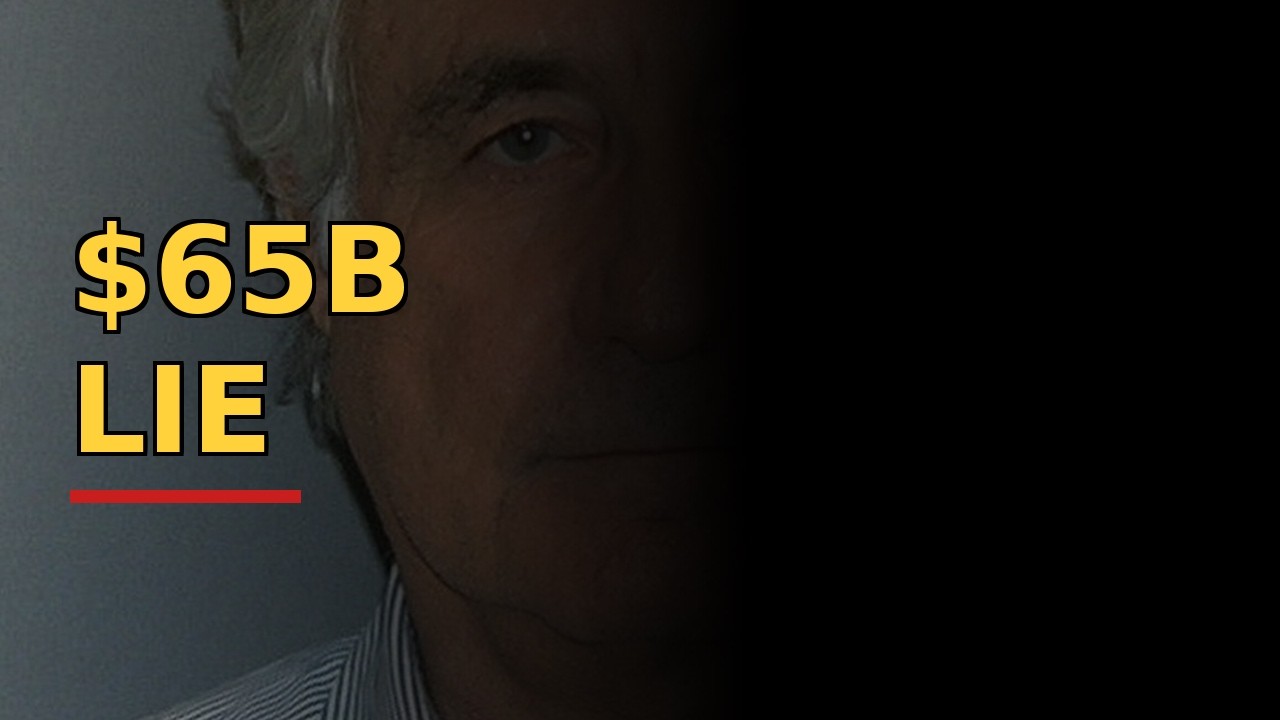
The Bernie Madoff Ponzi scheme was the largest in history. When it collapsed in December 2008, client statements showed about $65 billion that did not exist. He never made the trades he reported. He simply paid old investors with new investors’ money, for decades, until the 2008 financial crisis drained the cash.
He confessed, pleaded guilty, and died in federal prison. This is how a respected Wall Street insider pulled it off, and why so many smart people missed it.
Key facts
- Firm: Bernard L. Madoff Investment Securities (BLMIS), New York, founded 1960
- Paper losses: about $65 billion in fictitious balances on final client statements
- Exposed: confessed to his sons on December 10, 2008; arrested December 11, 2008
- Plea: guilty to 11 federal felonies on March 12, 2009, with no trial
- Sentence: 150 years, imposed by Judge Denny Chin on June 29, 2009
- Death: April 14, 2021, in federal custody at Butner, North Carolina, age 82
- Recovered: about $15.494 billion by trustee Irving Picard, as of September 29, 2026
Who Was Bernie Madoff Before the Ponzi Scheme?
Madoff started his firm in 1960 with savings from summer jobs. Over the next three decades he built a real and respected business. His trading business helped push Wall Street toward electronic trading. In the early 1990s he served as chairman of the Nasdaq stock market.
That reputation was the foundation of everything that came later. Picture a man who helped run the market. He tells you he quietly manages money for a few chosen clients. You don’t ask for much proof. You ask whether you can get in.
How the Bernie Madoff Ponzi Scheme Worked
The short answer is that nothing was invested. Madoff told clients he used a “split-strike conversion” strategy, buying large blue-chip stocks and hedging them with options. On paper, that explained his famously smooth returns of roughly 10 to 12 percent a year.
In reality, client money went into a bank account at JPMorgan Chase. When someone asked for a withdrawal, Madoff paid it out of that same pool, using other clients’ deposits. A small team produced fake trade confirmations and monthly statements to keep the illusion alive.
The returns were the genius of it. They weren’t spectacular. They were steady, almost dull, and that made them believable. Feeder funds around the world steered billions to him, often collecting fees without looking closely at what he was actually doing.
Why Nobody Stopped Him
Some people tried. Financial analyst Harry Markopolos repeatedly warned the Securities and Exchange Commission, starting in 2000, that Madoff’s numbers could not be real. The SEC looked into Madoff more than once and never uncovered the fraud. The agency’s own inspector general later criticized how it handled those warnings.
Madoff also kept his books unusually closed. Clients got paper statements, not real-time access. His auditor was a tiny firm with a single accountant who later pleaded guilty to charges connected to the case. For most investors, though, the strongest defense was simple: the money kept showing up when they asked for it.
How Long Did the Madoff Ponzi Scheme Run?
No one knows exactly. Madoff told prosecutors his fraud began in the early 1990s. Investigators and the court-appointed trustee have said the evidence points to it starting much earlier, possibly in the 1970s or 1980s. Either way, it lasted for decades before anyone stopped it.
The Collapse in December 2008
Ponzi schemes don’t usually die from detectives. They die from withdrawals. When the financial crisis hit in 2008, scared investors asked for billions back at once. The bank account couldn’t cover it.
The bank records show how fast it drained. The main account at JPMorgan held about $5.6 billion in August 2008. By the day of his arrest only about $234 million was left, federal prosecutors later said. More than $2 billion went out in the last five weeks alone.
On December 10, 2008, Madoff told his sons the business was “one big lie.” They went to the authorities. FBI agents arrested him the next morning. In March 2009 he pleaded guilty to all 11 counts against him, which meant there was never a trial. In June, Judge Denny Chin sentenced him to 150 years in prison, the maximum.
How Did Madoff Get Caught?
He wasn’t caught. He confessed. Regulators had looked at him and found nothing, so the end came from inside the family. According to the SEC complaint filed the next day, Madoff told two senior employees that he was “finished,” that he had “absolutely nothing” and that it was “basically, a giant Ponzi scheme.” He put the losses at at least $50 billion.
Those employees were his sons. Their lawyers called prosecutors and the SEC, and the FBI was at his apartment the next morning. Madoff had planned to hand out what was left to employees, family and friends first, the SEC said. It asked a court to freeze his assets so other investors were not shut out.
Who Helped Madoff Run the Fraud?
Madoff did not work alone. Frank DiPascali, hired in 1975 at 18 as an errand boy, rose to run the fake investment side. According to the SEC, he made backdated trades and phony records to back up returns that never existed. He pleaded guilty in 2009 and became the government’s key witness. He died in 2015 before he was sentenced.
Fourteen people were charged in all, the FBI says. Madoff’s brother Peter, the firm’s chief compliance officer, pleaded guilty and got 10 years in prison. Five employees went to trial, and a jury convicted all five.
Bernie Madoff’s Death and What Victims Got Back
Madoff died on April 14, 2021, at age 82. He was still serving his sentence at the federal prison complex in Butner, North Carolina. He had been suffering from kidney disease, according to his lawyers.
The recovery effort outlived him. Trustee Irving Picard has spent more than 17 years suing banks, feeder funds and investors who withdrew fictitious profits. As of September 29, 2026, he had recovered or reached agreements to recover about $15.494 billion. Customers with allowed claims have received at least 72.8 percent of those claims, according to the trustee. Most Ponzi victims never see anything close to that.
A second, separate pot also paid out. The Justice Department’s Madoff Victim Fund made its 10th and final payment in December 2024. In total it sent more than $4.3 billion to over 40,000 victims in nearly 130 countries, about 94% of their estimated losses, CNBC reported.
The family paid a terrible price, too. His son Mark died by suicide in 2010, two years to the day after the arrest. His son Andrew died of cancer in 2014.
The Bernie Madoff Ponzi Scheme by the Numbers
Different figures get quoted for the Madoff fraud, and they measure different things. This table puts the main ones side by side.
| Measure | Figure | Source |
|---|---|---|
| Assets the firm reported at the start of 2008 | More than $17 billion | SEC |
| Losses Madoff admitted to staff, Dec. 10, 2008 | At least $50 billion | SEC |
| Fake balances on final client statements | About $65 billion | Court record |
| Cash left in the main bank account at arrest | About $234 million | U.S. Attorney, SDNY |
| JPMorgan penalty paid toward victims (2014) | $1.7 billion | U.S. Attorney, SDNY |
| Madoff Victim Fund payouts (final, Dec. 2024) | $4.3 billion to 40,930 victims | Reuters |
| Trustee recoveries and settlements (Sept. 29, 2026) | About $15.494 billion | Madoff trustee |
| Prison sentence | 150 years | Court record |
What Happened to Madoff’s Wife and Family?
Ruth Madoff was never charged. As part of the 2009 forfeiture, she gave up her claim to about $80 million in assets and kept $2.5 million in cash. In 2019 she settled with trustee Irving Picard, paying $250,000 in cash plus $344,000 held in trusts for two grandchildren, court records summarized on Wikipedia show.
His brother Peter served a 10-year sentence. Both of Madoff’s sons died before him, Mark in 2010 and Andrew in 2014.
Bernie Madoff Ponzi Scheme Timeline
The Madoff fraud ran for decades but unravelled in a few days. These are the dates that matter, taken from the SEC, the FBI and the court record.
- 1960: Bernard L. Madoff founds his securities firm in New York.
- Early 1990s: Madoff serves as chairman of the Nasdaq stock market. By his own account, the fraud had begun by then.
- 1999–2008: The SEC receives credible, specific warnings about Madoff, according to its inspector general.
- December 10, 2008: Madoff tells his sons the business is “one big lie.”
- December 11, 2008: The FBI arrests him and the SEC files fraud charges.
- March 12, 2009: He pleads guilty to 11 federal felonies.
- June 29, 2009: Judge Denny Chin sentences him to 150 years.
- August 2009: Frank DiPascali, his top lieutenant, pleads guilty.
- April 14, 2021: Madoff dies in federal custody at age 82.
- December 2024: The Madoff Victim Fund makes its 10th and final payment.
How Madoff Faked the Trades
FBI investigators later traced the fraud back to its roots. According to the FBI’s case history, Madoff ran a legitimate market-making business from 1960 and a side business managing money for clients, many referred by his father-in-law. When he lost a significant amount of money on a bad trade, he covered it up with fake trades. “It just snowballed from there,” FBI Supervisory Special Agent Paul Roberts said.
The fake records were built from real history. A bond trader named David Kugel supplied details of genuine arbitrage trades, and bookkeeper Annette Bongiorno copied them into client accounts with different volumes. Bongiorno also searched old editions of The Wall Street Journal for the best-performing stocks and recorded made-up gains on client statements, the FBI says.
Exclusivity helped. Investors generally had to deposit at least $1 million and keep that as a minimum balance. That rule kept cash flowing in and made a Madoff account feel like a privilege. Bongiorno was later sentenced to six years in prison, and Peter Madoff, who had taken $15.7 million over the life of the fraud, got 10 years.
Madoff Documentaries and Series
The best-known is Netflix’s MADOFF: The Monster of Wall Street, a four-part series by Joe Berlinger released on January 4, 2023, Netflix says. It uses interviews with victims, investigators, whistleblowers and former employees. Our own documentary, embedded above, tells the whole story in one sitting.
The Markopolos Memo
The most detailed warning came from Harry Markopolos, a Boston financial analyst. On October 25, 2005, he gave the SEC a memo titled “The World’s Largest Hedge Fund is a Fraud”. He revised and resubmitted it on November 4, 2005. It listed 29 red flags suggesting Madoff was running a Ponzi scheme, PBS Frontline notes. Markopolos had first contacted the SEC in May 2000.
He told his story to Congress on February 4, 2009, at a House Financial Services subcommittee hearing on the Madoff scheme and the regulatory failures behind it. By then the warnings he had been making for nearly nine years were public record, and the SEC’s own inspector general was investigating why they had gone nowhere.
What the SEC Missed
The SEC had several chances. In August 2009 its Office of Inspector General published a report on why the agency never caught the fraud. It found that, before Madoff confessed, the SEC received six substantive complaints that raised significant red flags about his hedge fund business. Those warnings should have led staff to ask whether Madoff was trading at all.
The simplest check was never done properly. A second inspector general report said staff failed to verify Madoff’s trading with independent third parties such as FINRA, the Chicago Board Options Exchange or the Depository Trust Company. One call to the right clearing house would have shown the trades did not exist.
The Bank That Held the Money
From 1986, JPMorgan and its predecessor banks were the main bank Madoff used to run the scheme. In October 2008 its London staff wrote a memo saying they couldn’t verify his trading. The bank told UK regulators his returns were “probably” too good to be true and pulled about $300 million of its own money out of Madoff feeder funds. It filed no matching report in the United States.
In January 2014 the bank was charged with two Bank Secrecy Act felonies. It signed a deferred prosecution agreement and paid a $1.7 billion penalty that went to Madoff victims, the U.S. Attorney in Manhattan announced. Prosecutors called it the largest forfeiture ever taken from a bank.
What Is a Ponzi Scheme?
A Ponzi scheme is an investment fraud that pays earlier investors with money taken from newer ones. Usually nothing is really invested. It needs a steady flow of fresh cash and tends to collapse when recruiting slows or many people cash out at once, the SEC explains.
The name comes from Charles Ponzi, who fooled investors in the 1920s with a postage stamp scheme. Unlike a pyramid scheme, where members recruit others to earn, a Ponzi scheme runs through one central operator who claims to be investing the money. Madoff ran the largest one ever recorded.
Warning Signs of a Ponzi Scheme
A Ponzi scheme pays old investors with new investors’ money. It needs a steady flow of fresh cash and collapses when too many people cash out at once. The SEC’s investor alert on Ponzi schemes lists the red flags. Madoff showed almost every one of them.
- High returns with little risk. Madoff’s clients rarely saw a losing month.
- Overly consistent returns. His roughly 10 to 12 percent a year barely moved with the market.
- Secretive, complex strategies. Few clients understood the “split-strike conversion” story, and he didn’t explain it.
- Paperwork issues. Clients got paper statements, and his auditor was a tiny firm.
- Affinity. Money often came through social and community networks built on trust.
The lesson is not that smart people are foolish. It’s that no one should hand over money without independent proof that it is held and invested where the manager says.
The Victim Fund’s largest single source was about $2.2 billion recovered from the estate of Jeffry Picower, a Madoff investor who has since died, according to the Justice Department.
Key takeaways
- Madoff’s Ponzi scheme showed about $65 billion in fake balances when it collapsed in December 2008.
- He pleaded guilty in March 2009, got 150 years, and died in prison in April 2021.
- The SEC received six substantive complaints but never checked his trades with outside parties.
- Trustee Irving Picard has recovered about $15.494 billion; a separate DOJ fund paid out more than $4.3 billion.
Madoff’s method still shows up in modern collapses. The FTX collapse followed the same pattern of customer money quietly covering a hole, and Elizabeth Holmes is serving her own sentence today for misleading investors about what her company could really do.
Bernie Madoff Ponzi Scheme: FAQ
How much did Bernie Madoff steal?
Client statements showed about $65 billion when the scheme collapsed, but most of that was fake profit. The money investors actually put in and lost was far smaller, roughly $17.5 billion, according to estimates from the trustee’s office.
How long did the Madoff Ponzi scheme run?
At least from the early 1990s, by Madoff’s own account. Investigators believe it started earlier, possibly in the 1970s or 1980s, which would make it a fraud that lasted for decades.
What happened to Bernie Madoff?
He pleaded guilty to 11 federal felonies in March 2009, was sentenced to 150 years in prison in June 2009, and died in federal custody in Butner, North Carolina, on April 14, 2021, at age 82.
How did Bernie Madoff get caught?
He confessed. On December 10, 2008, he told his sons the business was a giant Ponzi scheme. They went to the authorities, and the FBI arrested him the next morning.
How much money did Madoff’s victims get back?
More than most fraud victims ever see. The court-appointed trustee had recovered or settled about $15.494 billion as of September 29, 2026, and a separate Justice Department fund paid $4.3 billion to 40,930 victims before it closed in December 2024.
What was the Bernie Madoff Ponzi scheme?
It was an investment fraud run through Madoff’s New York firm. He reported steady returns but made no trades, and he paid clients who withdrew money with cash deposited by other clients. It collapsed in December 2008 with about $65 billion in fake balances.
Did any bank pay for the Madoff fraud?
Yes. JPMorgan, Madoff’s main bank, paid a $1.7 billion penalty in January 2014 under a deferred prosecution agreement. The money went to Madoff victims.
What prison was Bernie Madoff in?
He served his sentence at the Federal Correctional Complex in Butner, North Carolina, and died there on April 14, 2021, at age 82.
Why is it called a Ponzi scheme?
It is named after Charles Ponzi, who cheated investors in the 1920s with a postage stamp scheme, according to the SEC’s Investor.gov.
Is there a Netflix documentary about Madoff?
Yes. MADOFF: The Monster of Wall Street, a four-part series directed by Joe Berlinger, came out on Netflix on January 4, 2023.
The Verdict
Madoff didn’t win people over with outrageous promises. He won with credibility, patience and returns just boring enough to believe. That’s the lesson of the biggest Ponzi scheme in history. When results look too smooth to be true, find out who holds the money. Then ask to see it.
Sources and further reading
- SEC Office of Inspector General: Investigation of Failure of the SEC to Uncover Bernard Madoff’s Ponzi Scheme (2009)
- SEC: charges against Bernard L. Madoff, December 11, 2008
- FBI: The Bernie Madoff case
- Madoff Recovery Initiative, SIPA Trustee Irving H. Picard
- SEC: charges against Madoff lieutenant Frank DiPascali (2009)
- CNBC: Madoff Victim Fund makes final distribution (Dec 30, 2024)
- SEC OIG: Program Improvements Needed Within the SEC’s Division of Enforcement (2009)
- SEC investor alert: Ponzi schemes and red flags
- Markopolos memo to the SEC, “The World’s Largest Hedge Fund is a Fraud” (2005)
- House Financial Services subcommittee hearing, Feb 4, 2009
- PBS Frontline: The Madoff Affair readings
- U.S. Attorney, SDNY: JPMorgan deferred prosecution agreement and $1.7 billion forfeiture (Jan 7, 2014)
- Reuters: Madoff victims collect $4.3 billion as fund completes payouts (Dec 30, 2024)
- SEC Investor.gov: Ponzi scheme
- Netflix Tudum: MADOFF: The Monster of Wall Street
By Magnatefall Team. Facts are checked against court records, regulator filings and company reports. Spotted an error? Send a correction.
Watch the full file: how a trusted Wall Street name faked $65 billion. Our documentary walks through the full Madoff file. It starts with the early days of his firm and ends on the 17th floor, where the fake statements were made. Free on YouTube, with a new documentary every week.
More files:
- Elizabeth Holmes and Theranos: How a $9 Billion Blood-Testing Empire Became a Fraud
- Sam Bankman-Fried: How the $32 Billion Crypto King Was Convicted and Sentenced to 25 Years
- Browse more in Billion-Dollar Scams documentaries
- Browse more in Mogulgrave documentaries
- Browse more in The 2008 Crisis documentaries
- See every Magnatefall documentary file
Ask AI about this file
Prefer to watch? See this story on YouTube or subscribe to Magnatefall.
More files you should read
 Billion-Dollar ScamsThe FTX Collapse Explained: How $32 Billion Vanished in Under a Week
 Billion-Dollar ScamsSam Bankman-Fried: How the $32 Billion Crypto King Was Convicted and Sentenced to 25 Years
 Billion-Dollar ScamsWhere Is Elizabeth Holmes Now? From a $4.5 Billion Fortune to a Texas Prison Cell
 Billion-Dollar ScamsElizabeth Holmes and Theranos: How a $9 Billion Blood-Testing Empire Became a Fraud